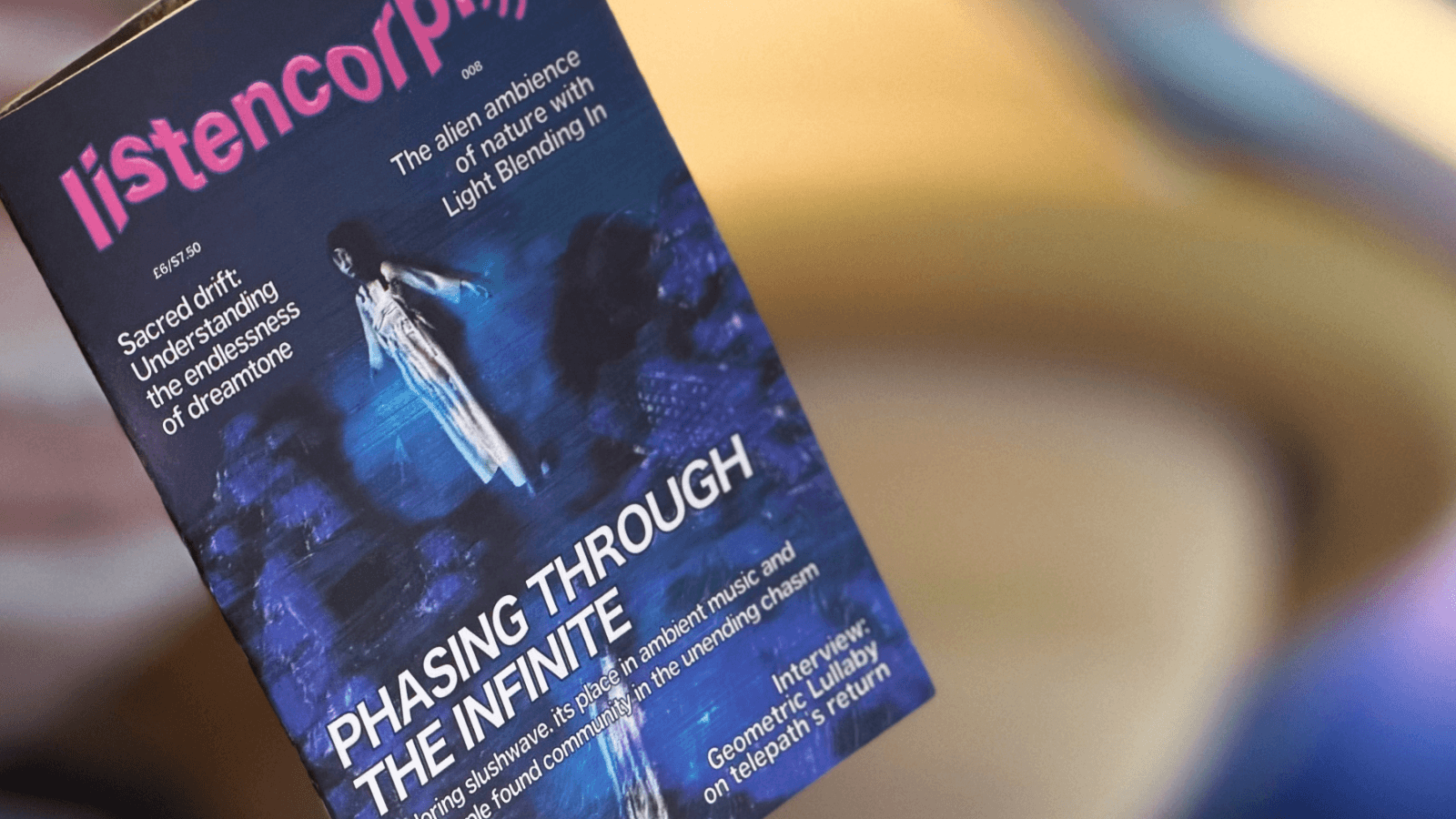
Andy Loebs – Glide By
Glide By
Andy Loebs
EP
Electronic
Lucia Affaticati
September 19, 2026




.jpg)



Scroll far enough through any feed of music, and a pattern emerges: impeccably engineered sounds stacked into arrangements that dazzle and then dissolve, all technique and no permanence. But there is a kind of music that works differently. Oda (2026, Mondoj), the new LP from Argentine composer Vic Bang, arrives as a quiet counterproposal to that grandiosity. Drawing from Balinese gamelan’s logic of resonance and attack, Victoria Barca builds 37 minutes of channel play, plucked string snippets and sine waves that flutter with quiet optimism. A pocket universe.
The palette is deeply electronic, but the sensibility recalls Cornelius’ abstract cuts in Sensuous (2006) timbres that take turns, each sound given its own conception and space before making way for the next. On Oda, this logic extends to the tracklist itself. Each title telegraphs its content and delivers on it: Gitar treats a budget digital guitar not as a melodic instrument but as a struck object, its decay more interesting than its pitch; Ritmika experiments with rhythm in ways the other tracks – and most other tracks outside of the walls of this release – don’t; and Teclas, the album’s closing track, is its most overtly melodic moment.
And then there is Sopro, the album’s finest moment, Camila Nebbia‘s saxophone enters with phrases that carry the spiritual weight of avant-garde jazz, something close to a Pharoah Sanders fragment filtered through an impressionistic sensibility, her breaths appearing and disappearing left and right across the stereo field with remarkable precision. The winds confirm what the rest of the album already suggests, that what unites this palette is not timbre variety but a shared understanding of how small sounds can hold space.
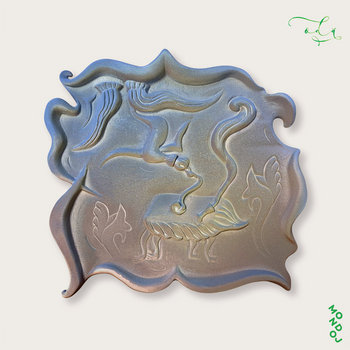
The textures of Oda are crystalline and elastic, somewhere between folktronica and sound art, with an atmosphere that occasionally recalls the more contemplative moments of fellow Argentine Juana Molina. The album’s cover art captures it well: a marine stone engraved with faceless creatures and vague outlines of sea fauna, iconography that feels intimidatingly ancient yet small enough to hold in your palm. On Curva, a high-pitched ringing tone pulses at alarm-clock speed, appearing and disappearing between channels, while a distorted sub bass draws slowly downward beneath it, a classic glitch resource that here feels less like a gesture and more like a breath.
On Flïút, cheap keyboard flutes feel no grand drive towards anything; a note repeats, oscillating between heavy and light, plucked sounds intercalating texture and intensity without ever resolving. Each track feels like the repertoire of a musical toy you never want to stop. The panning between channels makes it more exquisite still, a record that rewards those gracing themselves with headphones to listen, every small sound arriving from a precise and unexpected place.
This is not music that reaches for the dramatic frequency drop or the sudden rupture that punctuates so much computer music today. Instead, Oda is resolutely contemplative and does not apologise for it. There is a lineage here that runs through Visible Cloaks’ Fairlights, Mallets and Bamboo and its attentive listening to the timbral and the miniature, but Vic Bang’s version is more domestic, more intimate, and commits even more patiently to the textural and the timbral. Eight tracks is exactly the right length; any longer and the spritely spell would break.
The title means what it says. This is an ode to the properties of sound at minimum scale: tones, colours, resonances that do not ask to overwhelm but simply to be noticed. A small box that opens into something larger.






.avif)





.jpg)


.jpg)


.jpg)


.jpeg)


.webp)