After – Fell Asleep in the Sun
Fell Asleep in the Sun
After
Album
Alternative
Liam Murphy
October 4, 2026



.jpg)


To commemorate, codify and critique an artistic movement is a tough task. But at least documentarians of old had some semblance of definitive structures to work with. Both metaphorical and physical. Studio 54. CBGBs. The Hacienda. Books written and newspaper reports to look back on, reams of interviews to watch.
Vaporwave is – and always will be – different.
A movement that’s definitive home is online. A space that ostensibly offers clarity in cataloguing, but has any notion of this dwarfed by its scale and its tendency to decay and vanish. What’s more, capturing vaporwave is, in itself, a paradox. Documentaries offer permanence, something that the internet genre – at its roots – sought to reject. Many influential artists logged off a while ago, never to return. Where pre-internet music movements can thread to a chronological narrative fairly easily, vaporwave is awash with multiple storylines, branching out into many different places.
The creators of Nobody Here: The Story of Vaporwave will know this better than anyone now.
So what does it take to document such a movement? Many avid fans following this documentary’s creation know the answer. Several years, Indiegogo funds, numerous trips to interview talking heads in other countries, and a lot of patience.
What those fans have received in return is a two-hour-long exploration of their beloved genre, its multiple sounds, its history, the notable events it gave rise to and the community that has spawned from it.
The open and contradictory interpretations of the genre are clear to see from very early on
And vaporwave fans are who this documentary is for. The cast of interviewees is long and impressive, but, of course, most names will only be recognisable by those in the scene. To them, it may still be one of the first times they’ll see the faces behind the aliases – a remnant of the early-days “anonymity” that the doc itself briefly touches on.
Outsiders to the scene – even those who might know of it more through its visual aesthetic – might be left a little adrift, though this reinforces the sheer adoration and excitement the makers and subjects have for this genre. No time for clarifications, let me tell you what this world and this word mean to me.
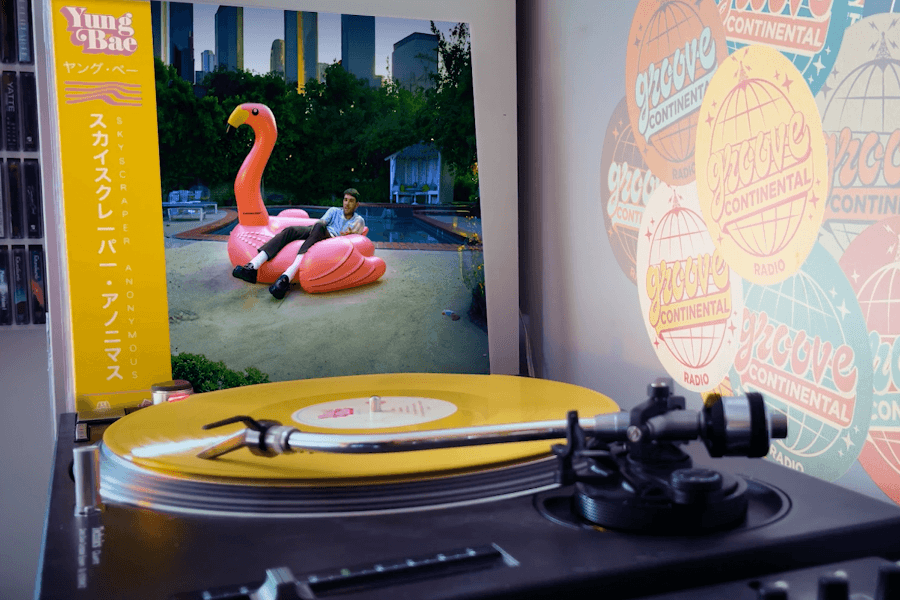
When these guests – legends of the scene such as Pad Chennington, Yung Bae, Ducat, Vaperror, Whitewoods and NMESH among them – describe what vaporwave is for them, it is like watching someone try to explain a dream that is slipping away in the light of the morning. To so many people, the movement is friendship, creativity, even a career. But this jostles with the surface aesthetic of the genre, one of vague allusions to corporate zen and subversion that can be hard to describe – add to this the cultural critique that the whole thing is empty aesthetic top to bottom. Most guests hit somewhere in that spectrum, though there are inevitable allusions to “vibes”, an unfortunate by-product of the genre’s unspeakable soul.
The open and contradictory interpretations of the genre are clear to see from very early on, too. SPF420’s co-creator Chaz Allen posits that, if it’s not sampled, it’s not vaporwave. Fast cut to Eyeliner – who uses little to no samples – dancing provocatively with a sausage dog. The documentarians here seem to invite these contradictions, as author Michael Brown deftly clarifies where he sees Eyeliner’s place in the genre. Nobody would now deny that LARP of Luxury or Buy Now are integral albums to the movement, but Chaz was there when the community first came together. Can these warring interpretations find some common ground? Is Nobody Here where they will?
The documentarians here seem to invite these contradictions, as author Michael Brown deftly clarifies where he sees Eyeliner’s place in the genre.
But many interviewees provide some amazing morsels of information that one might not be able to find anywhere else: Skyler Spence (Saint Pepsi) candidly describes his entrance into the scene, and his modest hope to collaborate on what would become Late Night Delight. Confirmation of a super exclusive James Ferraro Facebook-turned vaporwave pantheon. SPF420’s Chaz speaks with glee at securing a 30-strong attendance for his first online party.
Did Vektroid intend to repurpose Diana Ross samples into jagged accelerationist weapons to pierce the veil of the tech-corporate world that we live in? By their own admission, no.
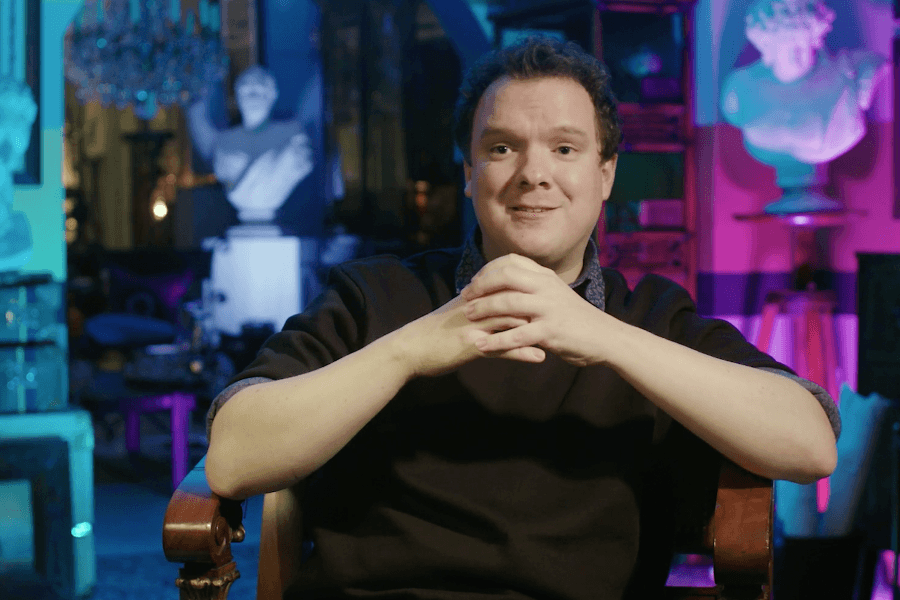
Conflicts and frictions aren’t avoided either. The notion – of course expressed by Adam Harper in 2013, seconded here by Yung Shiro – that the genre is a revolutionary vehicle of anti-capitalist critique, is set against the views of Lux Elite, christtt and George Clanton: No politics here, just people having fun with samples. Giving this movement any politically revolutionary power past the shirking of copyright laws and streaming platforms – note the double life of the genre to allow for acceptance onto Spotify today, as well as Bandcamp’s current owners – does feel like a strange claim to make now. Hindsight is 20/20, though.
It’s a story as old as time – the intention vs interpretation.
Did Vektroid intend to repurpose Diana Ross samples into jagged accelerationist weapons to pierce the veil of the tech-corporate world that we live in? By their own admission, no. Can vaporwave be interpreted as subverting modern interpretations of intellectual ownership and media consumption? Yes. Can enjoying vaporwave be your own personal rebellion against tech companies and the engorged world of entertainment capital? If you like.
This conflict is a sign of the flattened medium by which the movement is experienced, too. A person can click on Harper’s 2013 Dummy article and form an opinion just as easily as they can listen to an album and feel vaporwave for themselves.
Dream Catalogue’s story is explored, too. Though again, the fans will fill in the gaps that have to be left out of what is a lengthy saga. For the layperson watching, as soon as the label is up… it starts crumbling down. Though this is an evident and lasting splinter in the vaporwave scene – both in musical and in community terms – their place in the story is undeniable, and it is rightfully included, with Dream Catalogue’s Phasma representing the other side of the story.
It is probably the most definitive audiovisual insight into vaporwave that fans are liable to get. It is a creation – as many of the events, cassette swaps, festivals and past explorations have been – for the community
From there, vaporwave becomes a tool. A lens through which to look at a concept – like Donor Lens’ Midnight Store – an element to integrate into a dance-pop format, as DATAGIRL has done. Old synth arpeggiations can be recreated, a kind of simulated nostalgia – like that of FM Skyline.
It’s also a social tool; the landmark event of ElectroniCON provides more than enough proof that the movement breached screens and made its way into the real world. It was also a tool to pry open the often stiff door of a music career.
Here, we again see this integration of vaporwave into the streaming model. George Clanton’s success, Yung Bae’s Apple Radio show. For all the arguments over cultural critique vs friends having fun with samples got through suspicious means, these stories of success seem to contradict both opinions. But these are merely the commercially successful tip of a deep iceberg that includes artists still brazenly ripping melodies and sounds to repurpose.
But vaporwave is as much about its dead links. It is 404s. It is its long list of inactive artists: Contact Lens, Skeleton, 18 Carat Affair.
The documentary is probably the most definitive visual insight into vaporwave that fans are liable to get. Fans have supported it. Many of them are talking heads in it. It is a creation – as many of the events, cassette swaps, festivals and past explorations have been – for the community. But there are phases of critique, conflict and exploration within.
And that community is what we are left with at the end – despite what the title may infer. As much as people want the next 猫 シ Corp. or the next Saint Pepsi repress, what they really want is like-minded people to enjoy music with.
But vaporwave is as much about its dead links. It is 404s. It is its long list of inactive artists: Contact Lens, Skeleton, 18 Carat Affair. It is – as eccojams was – the track made while bored, sitting in a DAW, heard by no one. And that is a categorisation that is not genre-specific.
This ephemera is near impossible to capture. And much of the active vaporwave community owes itself to this strange bedrock of untellable stories.
.png)
.png)

.avif)



.jpg)


.jpg)


.jpg)


.jpeg)


.webp)


.png)